ERcast: Clinical Perspectives Podcast Preview


The summary below is from an episode of ERcast: Clinical Perspectives
Emergency medicine burnout predates COVID-19, and the specialty's post-pandemic strain is now a patient-safety and workforce issue. For COVID-19 aerosol control, higher air changes per hour, portable HEPA filtration, and supplemental UVGI all matter, especially in small enclosed clinical spaces.
Emergency Medicine Specialty Recovery
- Burnout before the pandemic: Emergency medicine entered COVID already strained, with burnout described as widespread rather than exceptional and no longer a problem affecting only a small subset of clinicians.
- Post-COVID specialty condition: The central framing is that EM is in critical condition but not broken, a distinction that supports urgent repair without surrendering the specialty's core identity.
- Shared EM traits: EM clinicians are framed as people who run toward stress, organize chaos, and adapt quickly, strengths that matter as much for redesigning systems as for bedside resuscitation.
- Mental health destigmatization: A major silver lining is openly naming physician mental health needs, with the argument that recovery starts when suffering is treated as human rather than hidden.
- Department-level change capacity: The same specialty that rapidly reinvented triage, intubation practice, and hypoxemia management can redesign its own workflows and culture. We get into that practical mindset in the episode.
COVID Ventilation and Staff Protection
- Air changes per hour: For COVID-19 rooms, the practical benchmark cited is roughly 6-12 air changes per hour, with around 10 framed as a reasonable target for aerosol mitigation.
- Aerosol-generating scenarios: Ventilation matters even more when aerosol generation is likely, including nebulizers, suctioning, high-flow nasal cannula, and noninvasive positive-pressure ventilation.
- Portable HEPA filtration: Portable HEPA units are most useful in small enclosed spaces and can add meaningful protection when fixed room ventilation is limited, a placement nuance we cover in the episode.
- Supplemental UVGI use: Ultraviolet germicidal irradiation is presented as an adjunct for SARS-CoV-2 inactivation when increasing ventilation or filtration is not feasible.
- Evidence base limits: Much of the supporting literature comes from engineering and built-environment studies rather than bedside trials, but the directional conclusion is consistent: more ventilation is better.
Subscribe to ERcast: Clinical Perspectives to listen to the episode.
References:
- Deng X, et al. Control of exhaled SARS-CoV-2-laden aerosols in the interpersonal breathing microenvironment in a ventilated room with limited space air stability. J Environ Sci (China). 2021 Oct;108:175-187.PMID: 34465431
- Azuma K, et al. Environmental factors involved in SARS-CoV-2 transmission: effect and role of indoor environmental quality in the strategy for COVID-19 infection control. Environ Health Prev Med. 2020 Nov 3;25(1):66. PMID: 33143660.
- Wang F, et al. Performance Improvement of a Negative-Pressurized Isolation Room for Infection Control. Healthcare (Basel). 2021 Aug 23;9(8):1081. PMID: 34442218.
- Alkalamouni H, et al. Adopting fresh air ventilation may reduce the risk of airborne transmission of SARS-CoV-2 in COVID-19 unit. J Infect. 2021 Nov;83(5):e4-e5. PMID: 34480889.
- Li Y, et al. Role of ventilation in airborne transmission of infectious agents in the built environment - a multidisciplinary systematic review. Indoor Air. 2007 Feb;17(1):2-18. PMID: 17257148.
- https://www.cdc.gov/infectioncontrol/guidelines/environmental/appendix/air.html#tableb1
- https://journals.sagepub.com/doi/full/10.1177/1750458920949453
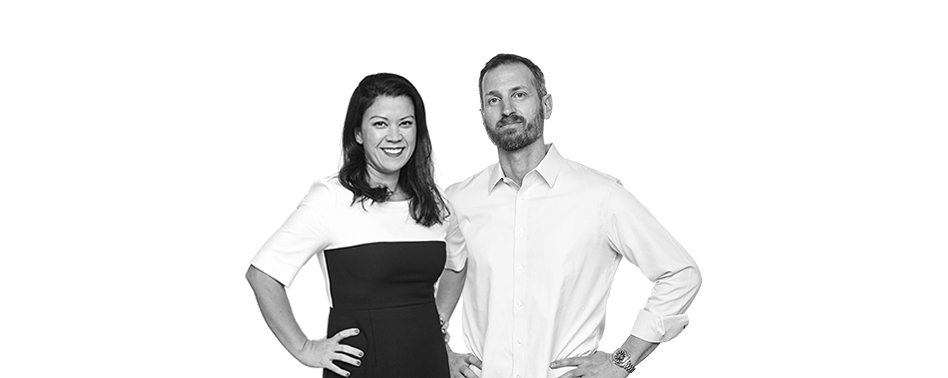
Faculty
- Mizuho Morrison, DO
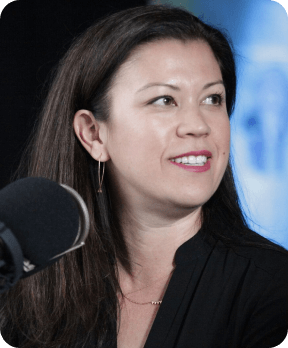
Dr. Mizuho Morrison is a board-certified Emergency Medicine physician practicing in Southern California. She played a leadership role in FeminEM, helping develop and support its speaker coaching program, and occasionally contributes to Rebel EM. Additionally, Mizuho is an entrepreneur, co-founding 3MD| Three Mommy Doctors, a medical device company that redesigned first-aid kits for children. She lives in Orange County, CA, with her two children.
- Rob Orman, MD
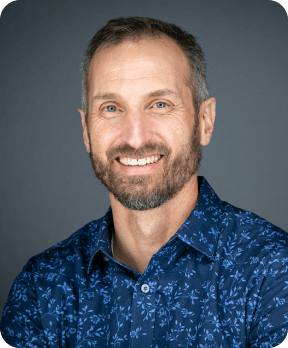
Dr. Rob Orman is an emergency physician, educator, and executive coach specializing in physician performance and professional fulfillment. After more than 20 years in community emergency medicine, he now works with clinicians across specialties to address burnout, inefficiency, and career challenges. He earned his medical degree from Emory University School of Medicine and completed his residency at Denver Health Medical Center, where he served as chief resident. Dr. Orman is the founder of the Stimulus podcast and Orman Physician Coaching. He previously served as chief editor of ERcast and hosted Essentials of Emergency Medicine for nearly a decade.