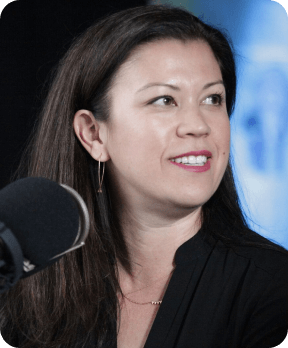
ERcast: Clinical Perspectives Podcast Preview



The summary below is from an episode of ERcast: Clinical Perspectives
Legally defensible charting is less about volume and more about showing your clinical reasoning. In emergency medicine documentation, the safest note explains why a high-risk diagnosis was considered but not believed, what you think is most likely instead, and what uncertainty was discussed with the patient.
Defensible Emergency Department Charting
- Core purpose of charting: A strong ED note has three jobs: communicate with other clinicians, support billing, and show whether the standard of care was met when decisions are later scrutinized.
- Problem-focused clinical record: Defensibility starts by documenting what you actually did, with complaint-specific details like an ECG for chest pain or an abdominal exam for a child with abdominal pain.
- High-risk diagnosis rationale: The key legal protection is a customized MDM that states the dangerous diagnosis you considered and why the presentation made it less likely, not a generic denial.
- Most likely diagnosis framing: Notes are stronger when they name what you do think is going on, along with the uncertainty discussed, additional workup offered, and return precautions given.
- Template customization pitfalls: Dot phrases help only when they are individualized; auto-populated laundry-list differentials can backfire by implying you never truly considered the diagnosis that was missed. We get into a practical wording approach in the episode.
- AMA refusal documentation value: When patients decline recommended testing or treatment, documenting the discussion, the decision against advice, and the invitation to return can be as protective as an AMA form.
Scribes, Macros, and Narrative Detail
- Scribe role boundaries: Scribes can reduce screen time and improve workflow, but the final medical decision-making should remain yours and should be completed with case-specific language.
- Macro design principles: The safest macro is a generic scaffold you finish yourself, often with only a few added words tied directly to the chief complaint and bedside findings.
- Chief complaint specificity: If you use templates, add at least one concrete detail showing you evaluated this patient rather than merely checking boxes, especially in the history and exam.
- Color within boundaries: Behavioral context matters when it affects care delivery; quoting hostile or aggressive statements can clarify the environment without adding editorial or insulting language.
- Care environment standard: Standard of care is judged in context, so documenting limited resources or a hostile encounter can explain why care differed from an ideal workflow. That distinction is worth hearing in the chapter.
Subscribe to ERcast: Clinical Perspectives to listen to the episode.
- Falker, Elizabeth Swire. "The Medical Malpractice Crisis in Obstetrics: A Gestalt Approach to Reform." Cardozo Women's LJ 4 (1997):
- Verghese A. Hard cures: doctors themselves could take several steps to reduce malpractice suits. New York Times. March 16, 2003. Quoted by Roter D. The patient-physician relationship and its implications for malpractice litigation. J Health Care Law Policy. 2006;9:311.
- Levinson, Wendy. "Physician-patient communication: a key to malpractice prevention." Jama 272.20 (1994): 1619-1620.
Faculty
- Matthieu DeClerck, MD
Dr. Matthieu DeClerck is a board-certified emergency medicine physician based in Southern California. He completed his emergency medicine residency at Los Angeles County+USC Medical Center. Dr. DeClerck has experience practicing in both emergency department and urgent care settings and has a particular interest in wilderness and austere medicine. He has been involved in medical education and hands-on training, with a focus on applying core emergency medicine principles in real-world and resource-limited environments.
- Mizuho Morrison, DO
Dr. Mizuho Morrison is a board-certified Emergency Medicine physician practicing in Southern California. She played a leadership role in FeminEM, helping develop and support its speaker coaching program, and occasionally contributes to Rebel EM. Additionally, Mizuho is an entrepreneur, co-founding 3MD| Three Mommy Doctors, a medical device company that redesigned first-aid kits for children. She lives in Orange County, CA, with her two children.
- Andy Barnett, MD