ERcast: Clinical Perspectives Podcast Preview



The summary below is from an episode of ERcast: Clinical Perspectives
Clinical handoffs shape patient safety, diagnostic continuity, and team performance in the emergency department. Shift change is a high-risk moment where omissions, unclear ownership, and workflow friction can compound quickly.
Emergency Department Handoffs
- Shift change risk: Care transitions are a predictable vulnerability in emergency medicine, with missed tasks and diagnostic drift clustering when ownership changes at the bedside.
- Structured sign-out elements: High-reliability handoffs hinge on illness severity, active problems, pending data, and contingency planning rather than a loose recap of the ED course.
- Closed-loop ownership: The safest transfers make explicit who owns the next action, especially for time-sensitive follow-up like repeat exams, callbacks, and disposition pivots.
- Interruption control: Sign-out quality degrades when pages, new arrivals, and side conversations fragment attention; protecting a brief sterile handoff interval matters. We get into practical workflow fixes in the episode.
- Culture and accountability: Strong handoffs are less about memorized mnemonics than shared team expectations, direct questions, and a low-friction way to surface uncertainty before it becomes error.
Subscribe to ERcast: Clinical Perspectives to listen to the episode.
Faculty
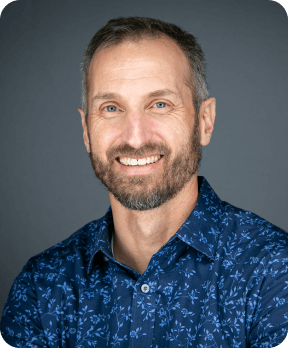
- Rob Orman, MD
Dr. Rob Orman is an emergency physician, educator, and executive coach specializing in physician performance and professional fulfillment. After more than 20 years in community emergency medicine, he now works with clinicians across specialties to address burnout, inefficiency, and career challenges. He earned his medical degree from Emory University School of Medicine and completed his residency at Denver Health Medical Center, where he served as chief resident. Dr. Orman is the founder of the Stimulus podcast and Orman Physician Coaching. He previously served as chief editor of ERcast and hosted Essentials of Emergency Medicine for nearly a decade.
- Matthew DeLaney, MD, FACEP, FAAEM
Dr. Matthew DeLaney is an emergency medicine physician and educator based in Birmingham, Alabama. A native of Mobile, he earned his medical degree from the University of South Alabama and completed his emergency medicine residency at Maine Medical Center.Dr. DeLaney has experience in both community and academic emergency medicine and is known for his commitment to teaching and medical education. He lives in Birmingham with his wife, Erin, who is also a physician, and their two daughters.